
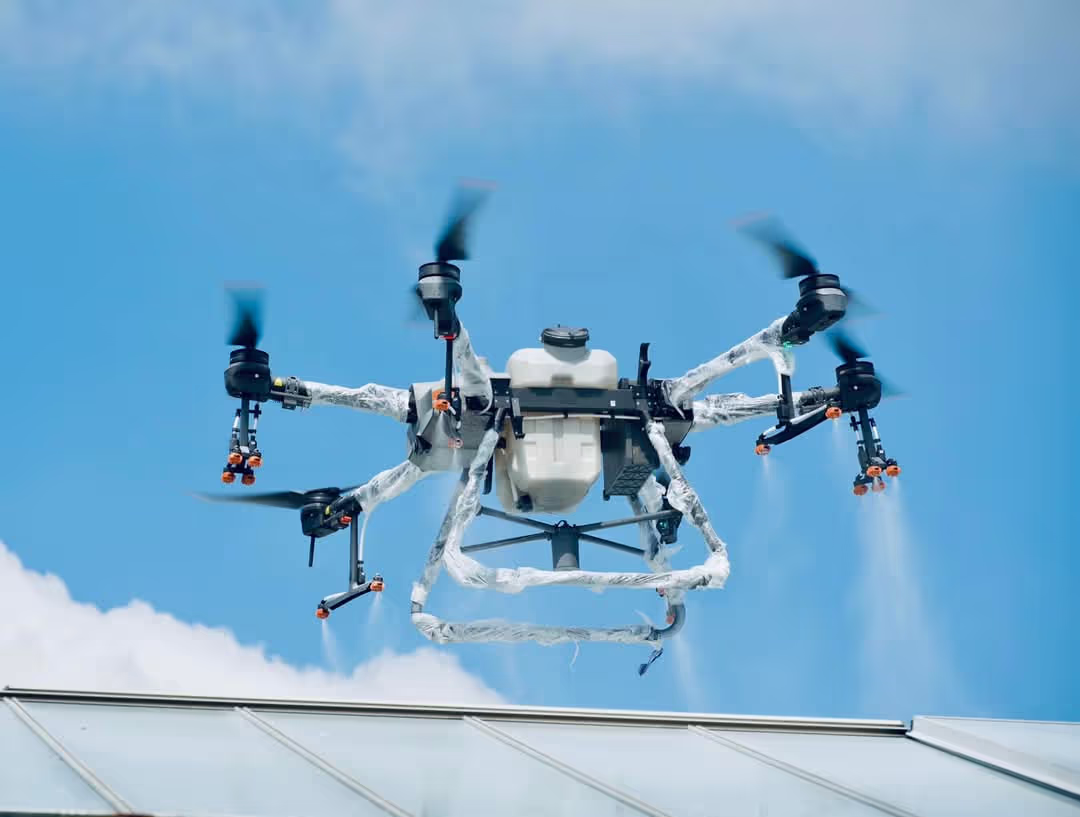
GREENHOUSE SHADING

Excessive sun exposure can lead to plant overheating, excessive transpiration and reduced yields. Proper shading of greenhouses helps maintain optimal conditions for growth, improves growing efficiency and reduces the risk of heat stress in plants.
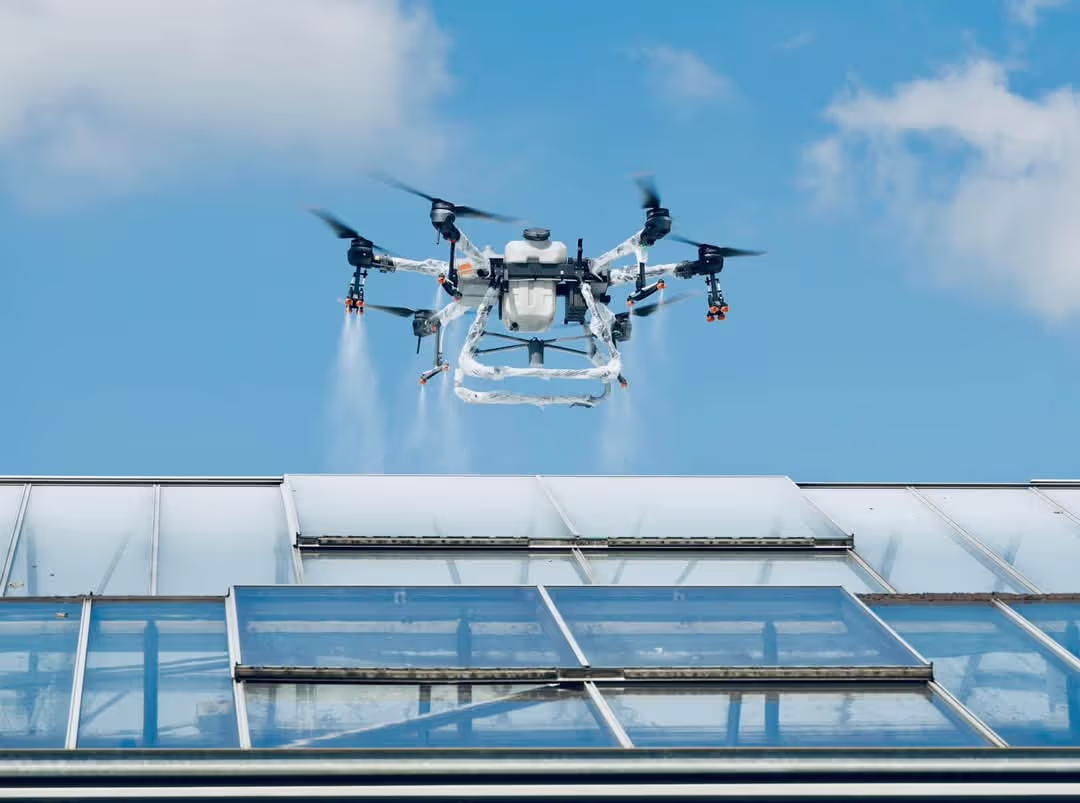
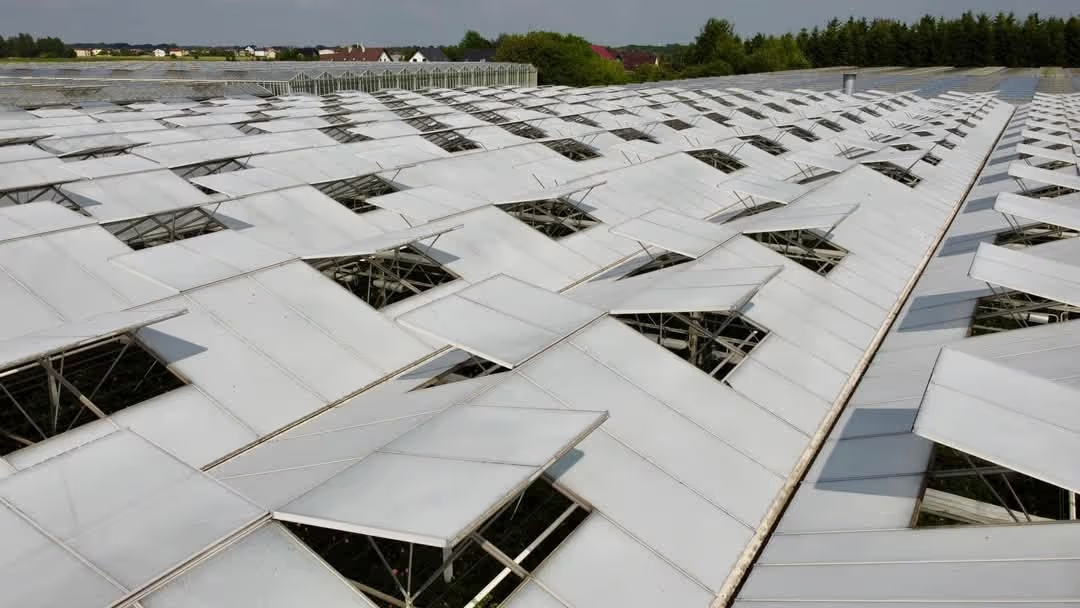
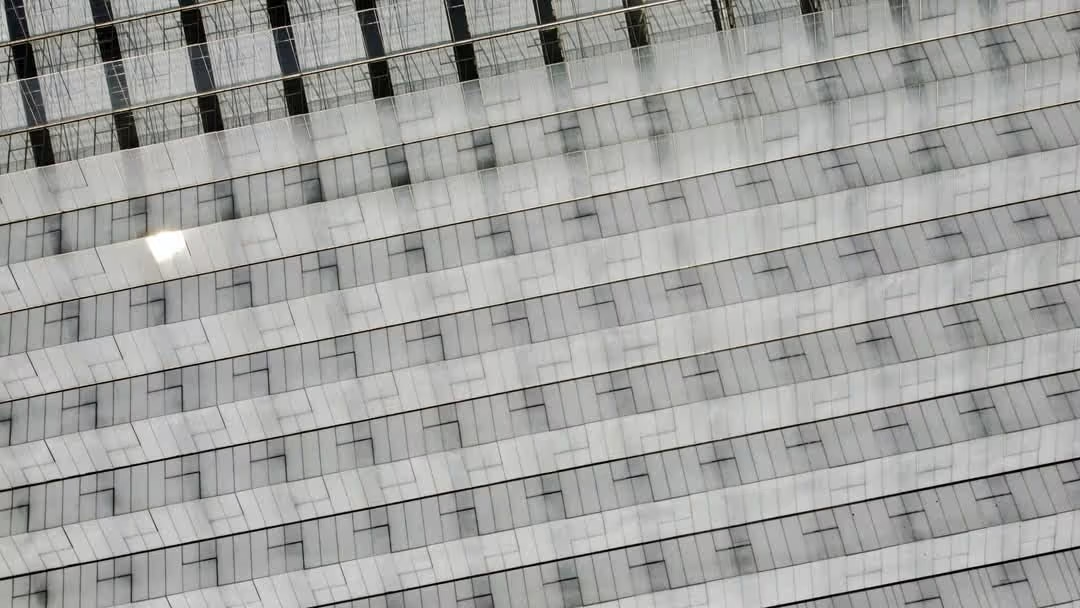
greenhouse shading by droneshaded greenhouseshaded greenhousegreenhouse shading by drone
BENEFITS OF DRONE GREENHOUSE SHADING

Precise and even application

Drones cover the greenhouse area precisely. Thanks to modern navigation systems and application control, each layer of coating is spread evenly, providing effective protection for the crops grown inside.

Speed and efficiency

Drones work far faster than manual methods or ground-based spraying. They cover large areas in a short time, so greenhouses can be protected quickly from excessive sunlight.

Savings on water and product

The right coating rate with no needless losses. Precise dosing lets us use less shading product, which means lower costs and a smaller environmental impact.

Safety

There is no need to work at height. This removes the risk of injury that comes with traditional coating application and makes the whole process safer for workers.

Tailored to your needs

We can apply different types of coating to suit your growing system. Depending on crop requirements, we can use coatings with different levels of shading and durability.

Minimal disruption to your operation

Drone application is non-invasive and does not require you to stop day-to-day work in the greenhouse. Drones can also work in hard-to-reach places without damaging plants or infrastructure.

HOW WE APPLY SHADING BY DRONE

A drone proves its worth where a machine cannot get onto the roof or the greenhouse structure does not allow it, and on large, scattered sites. The result depends not on the volume of liquid but on the thickness of the layer on the covering, so we closely control both the product rate and the application conditions.

Application conditions

  • Covering clean and dry – wet film dilutes the coating.
  • New film: we first remove the greasy layer, otherwise the coating does not hold well.
  • Relative humidity below 80%, with no rain for about 12 hours after application.
  • Temperature of about 10–25 °C – the coating must dry before the night dew sets in.
  • Wind of no more than about 7 km/h – in stronger wind the layer is too thin and drift increases.

Rate and uniformity

  • The amount of product per hectare is the same as with machine application – just with less water.
  • Too little product: weaker shading and lower resistance to wash-off.
  • Too much: the plant loses light, and with it yield and quality.
  • We choose the rate according to the crop, the time of year and the product manufacturer's recommendations.
  • We adjust droplet size to the weather – via nozzles or the rotation speed of the spinning disc.

Removing the coating

  • At the end of the season we use the drone to apply a product that removes the coating.
  • The covering must be dry and fully wetted – any missed spots will not wash off.
  • After at least about 15 minutes, rain washes the coating off, or we remove it by brushing.
  • Before application we check the drainage – water from the roof must not end up in the irrigation water tank.

Safety

  • We fly in line with SACAA RPAS rules and the required operation notifications.
  • A designated, safe take-off and landing area.
  • The operator keeps the drone in sight at all times while it is flying over the roof.
  • No people stay in the greenhouse during the operation.
REQUEST SHADING OR WASHING

DRONE WASHING OF GREENHOUSE AND TUNNEL ROOFS

Dust, soot, algae, bird droppings and leftover shading coating can cost plants anywhere from a few to over ten percent of light. In horticulture, 1% more light is generally taken to mean roughly 1% more yield, so a clean roof really pays off. The drone washes the covering without anyone stepping onto the structure and without heavy equipment on the roof.

When to wash

  • In autumn or winter, after the season and after the shading coating has been removed, before supplementary lighting.
  • Before the spring start of production, when light is at its lowest.
  • After dusty work nearby, grass fires or road pollution.
  • When you can see a green algae film or streaks on the covering.

How it works

  • We inspect the roof, the type of covering (glass, film, polycarbonate) and the water drainage.
  • The drone applies the cleaning solution evenly across the whole surface.
  • The product acts for the time recommended by the manufacturer.
  • The dirt is washed away by water – from the drone, from a sprinkler system or from rain.
  • We choose the product to suit the covering, so that neither the film nor the seals are damaged.

Why use a drone

  • Nobody has to go onto the roof – fewer injuries and broken panes.
  • Fast, even on large and scattered sites.
  • Polytunnels and roofs that machinery cannot reach.
  • Uses less water than manual washing or washing with a pressure lance.
  • Can be combined with another job: washing and, in season, shading.

What you need to prepare

  • Access to water and a take-off and landing spot for the drone.
  • Working drainage – runoff from the roof must not end up in the irrigation water tank.
  • Ventilation windows closed and people outside the greenhouse during the job.
  • Information about the crop inside and any sensitive plants.
BOOK GREENHOUSE AND POLYTUNNEL WASHING
CONTACT US!
Have questions or need a quote?
Contact us today and find out how our drones can help protect your crops!
tel. +27 72 300 1446

CONTACT

Thank you for your message.
We will get back to you as soon as possible.
Oops! Something went wrong while submitting the form.
Copyright © 2025, Agrodron Sp. z o.o.